
How to Clean Premium Sunglasses Without Damaging the Lenses
May 20, 2026
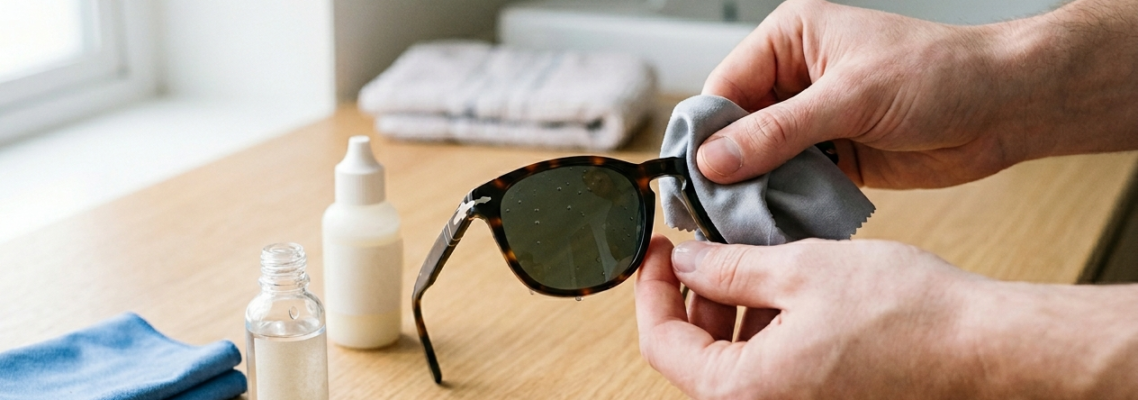
Flush your luxury frames with lukewarm water to remove abrasive dust particles before applying a single drop of lotion-free mild dish soap. Gently rub the lenses with your fingertips and dry them strictly using a clean microfiber cloth. This technical approach guarantees zero micro-scratches on expensive anti-reflective and polarized coatings.
Maintaining Long-Term Optical Precision
Adhering to a systematic cleaning routine ensures that the structural integrity of your eyewear remains intact over several years of use. By removing salt deposits and environmental pollutants before they bond to the frame material, you prevent the pitting of metal components and the clouding of high-grade acetate.
This level of meticulous care preserves the original factory finish and ensures that the light-filtering properties of the lenses remain accurate for the lifetime of the product.
Why Regular Cleaning is Essential for Luxury Eyewear
Premium eyewear relies on ultra-thin chemical coatings to reduce glare and filter ultraviolet light. When sweat, skin oils, and airborne silica particles sit on these surfaces, they trigger a rapid chemical degradation process. Acidic sweat slowly eats away at the critical anti-reflective layers.
The Mechanics of Lens Degradation
Abrasive dust acts like sandpaper on delicate polarized lenses. If you leave particulate matter on the lens surface, daily friction from handling forces these microscopic jagged edges into the soft polycarbonate base.
Regular glasses care stops this physical wearing process. It maintains optimal optical clarity and extends the structural integrity of your acetate frames. Routine smudge removal prevents permanent chemical etching on your high-end optics.
The Best Tools and Materials for Cleaning Designer Sunglasses
Building a robust eyewear maintenance kit guarantees long-term scratch prevention and protects your optical investment. To maintain the structural and chemical integrity of your sunglasses, ensure your kit includes these three technical essentials:
- Optical-grade microfiber cloth: Engineered with a specific weave to trap microscopic debris within the fibres rather than dragging contaminants across the lens.
- Lotion-free mild dish soap: Functions as a neutral surfactant to break down lipid barriers from fingerprints without the additives that cause greasy streaks.
- Dedicated optical lens cleaner: A specialized solution explicitly labelled safe for anti-reflective and polarized coatings to prevent the risk of chemical delamination.
Assembling these specific tools and avoiding all paper-based products, you establish a professional baseline for successful eyewear preservation.
Step-by-Step Guide: How to Clean Premium Sunglasses Safely
Executing a precise cleaning protocol eliminates the risk of accidental surface scoring. Always start by washing your own hands to remove grease and coarse dirt.
Rushing this process guarantees micro-abrasions. Follow this exact sequence for flawless results:
- Flush under a gentle stream of lukewarm tap water to rinse away loose grit.
- Apply a tiny drop of mild dish soap to each lens and gently massage both sides using only your clean fingertips.
- Rinse thoroughly to ensure absolutely no soap residue remains on the lenses or acetate frames.
- Shake off excess moisture and gently press dry using a dedicated microfiber cloth.
Following this systematic decontamination process ensures your premium lenses remain free of debris while protecting the integrity of their specialized coatings.
Common Mistakes to Avoid When Wiping Your Lenses
Most permanent damage occurs during rushed, improvised cleaning attempts that ignore the sensitive nature of high-end optical coatings. To prevent irreversible failure and maintain the standards required for brands like Oakley and Ray-Ban, you must avoid several critical handling errors.
Adhering to strict material safety guidelines involves identifying and eliminating these common destructive habits:
- Dry Wiping: Rubbing dry lenses with any material drags trapped atmospheric dust across the protective films, creating immediate surface scoring.
- Using Clothing: Clothing fibres contain embedded grit and chemical fabric softeners that smear oils and scratch the lens surface simultaneously.
- Harsh Chemical Solvents: Using window sprays or household degreasers breaks down the molecular bonds in premium coatings, leading to a spiderweb of microscopic cracks known as crazing.
- Abrasive Paper Products: Tissues and paper towels are made of wood pulp, which acts as a coarse abrasive on delicate polarized layers.
Identifying these technical red flags, you can implement a cleaning strategy that preserves the clarity and value of your designer frames.
Temperature and Impact Management
Never leave your luxury frames resting on a car dashboard. The intense thermal load expands the frame material and destabilises the lens adhesives.
Always house your designer sunglasses in a rigid, crush-proof case when not actively worn. Wrap them in a clean microfiber cloth before closing the case to absorb ambient moisture and provide a buffer against internal friction.
Secure Your Vision with Exclusive Products
Your premium eyewear is a high-value investment that requires professional-grade care. Protecting your property involves adopting robust maintenance habits to prevent accidental damage and avoid the need for costly replacements. By utilizing the correct techniques and materials, you ensure your equipment remains in peak condition for years to come.
Trust Exclusive Products for the technical guidance and industrial-grade equipment needed to maintain your eyewear portfolio. Visit us today for a professional inspection and a transparent quote to keep your optics performing at the highest level.
FAQs
What kind of soap is safe to use on premium polarized sunglasses?
Use only lotion-free mild dish soap. Basic dish detergent acts as a neutral surfactant to dissolve facial oils without leaving the greasy film or chemical damage caused by standard hand soaps.
Can I use household glass cleaner or alcohol on my designer lenses?
No. Harsh chemicals like ammonia, bleach, and alcohol will strip away anti-reflective treatments and cause polycarbonate lenses to become cloudy and brittle over time.
Is it safe to use a paper towel or my shirt to wipe off smudges?
Avoid these materials entirely. Paper towels contain abrasive wood pulp, and clothing traps dust and fabric softeners that cause micro-scratches. Stick exclusively to optical-grade microfiber cloths.
How do I clean hard-to-reach areas like hinges and nose pads?
Gently scrub these areas with a soft-bristled toothbrush and lukewarm soapy water to remove compacted debris. Rinse thoroughly afterward to prevent any residue from corroding the internal metal screws.